How to Hire the Right VTEX Developers for Complex Ecommerce Projects

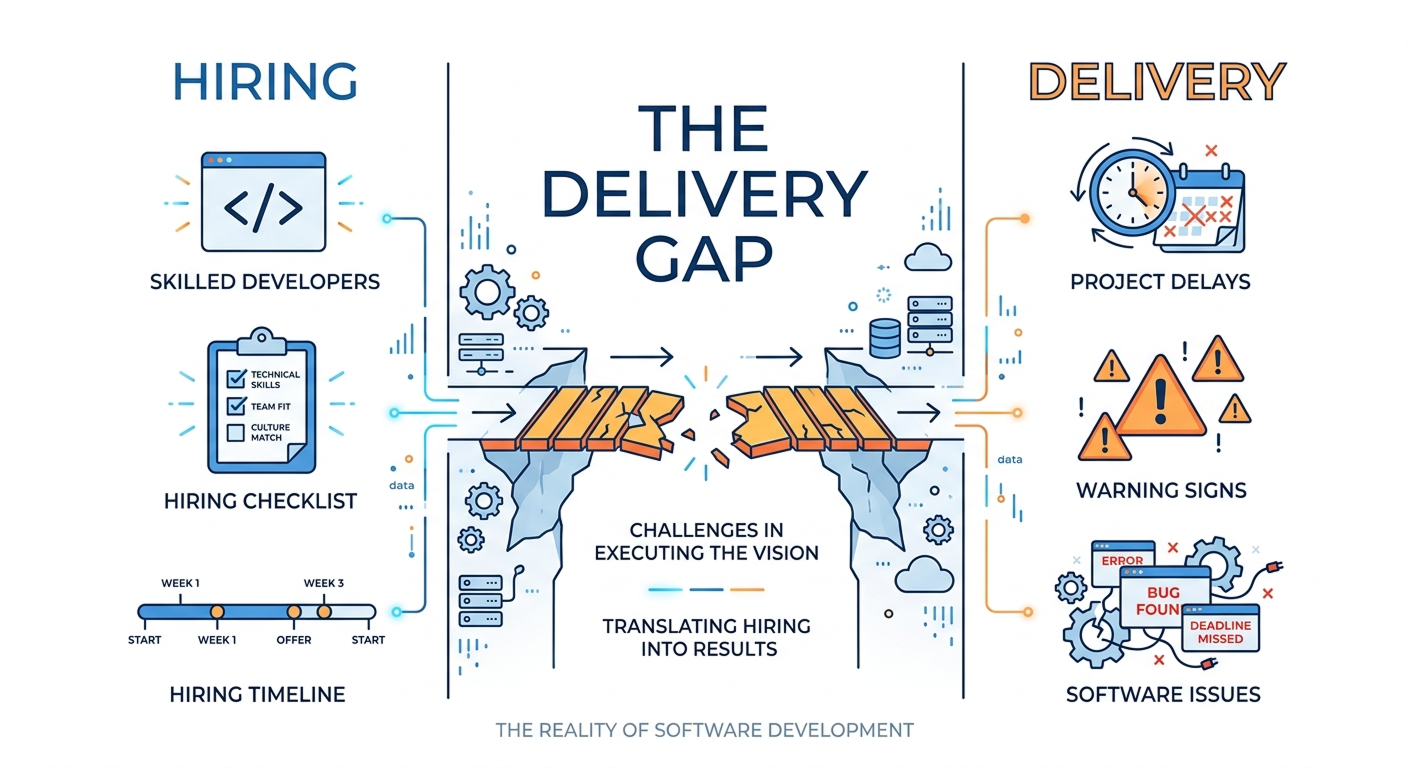
Most Companies Don’t Struggle to Hire — They Struggle to Deliver
Hiring VTEX developers is not the real challenge. Delivering results quickly is.
Many organizations successfully hire developers, yet still encounter slow progress, delayed feature releases, and integration issues that surface late in the process. These challenges often lead to rework and missed timelines.
The issue is rarely a lack of effort. It is a lack of experience and readiness.
VTEX is not just another ecommerce platform. It requires a combination of platform-specific knowledge, architectural understanding, and real-world problem-solving capabilities, particularly in complex B2B environments.
Why These Challenges Often Go Unnoticed
In many cases, slow delivery is not immediately seen as a structural issue. It is often interpreted as part of the normal execution process.
Timelines extend, rework happens, and integrations take longer than expected. Instead of questioning the setup, teams adjust expectations and continue moving forward.
How this shows up can vary depending on the type of organization.
Enterprise and Mid-Market Teams
For enterprise and mid-market teams, projects are typically well-defined and properly resourced. Roadmaps are clear, and multiple teams are involved across different areas of the platform.
Despite this, delivery often slows as complexity increases. Integrations become harder to manage, B2B logic introduces edge cases, and small changes begin to impact multiple systems.
This is often accepted as a natural result of operating at scale. In reality, it is usually a gap in platform-specific experience, particularly in how VTEX handles architecture, integrations, and B2B complexity.
SMB and Growing Teams
For smaller teams, the situation looks different but leads to similar outcomes. The scope is simpler, and expectations are more straightforward.
However, even basic updates can take longer than planned. Checkout adjustments, integrations, or feature changes require more iteration than expected.
This is often attributed to limited capacity. In many cases, the underlying issue is a lack of focused VTEX experience, which turns otherwise simple tasks into slower, trial-and-error execution.
SI Teams (Internal / External)
In organizations working with system integrators or relying on internal SI structures, friction tends to appear in how work progresses.
Projects feel heavier over time. Dependencies increase, timelines stretch, and execution becomes less predictable.
This is frequently accepted as part of working with external partners or large teams. However, it is often driven by deeper architectural or platform-level gaps that are not addressed early.
Across all of these scenarios, the pattern is consistent.The issue is not the presence of a team or the effort being applied.It is the gap between having development capacity and having the right experience to execute effectively within the VTEX ecosystem.
Recognizing this difference early is critical. Without that clarity, hiring decisions tend to focus on adding more resources rather than addressing the root cause of slow delivery.
Why VTEX Projects Require More Than Just Developers
At first glance, it may seem that developers with strong React or backend experience can handle VTEX. In practice, the platform introduces unique complexities that go beyond general development.
Successful delivery depends on understanding:
- VTEX IO architecture and application structure
- FastStore (Next.js) storefront implementation
- B2B commerce logic such as pricing, organizations, and trade policies
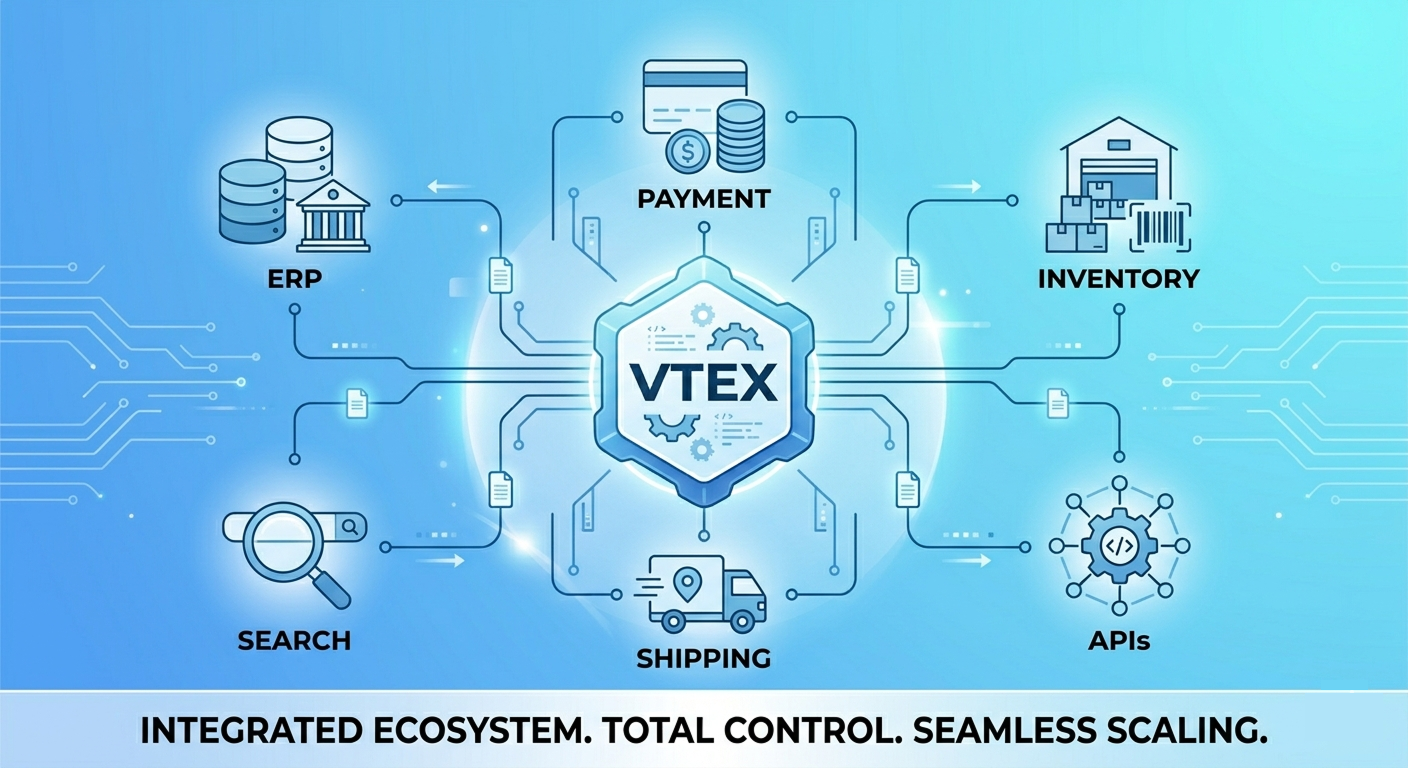
- Multi-system integrations including ERP, middleware, and APIs
Without this context, even capable developers require time to learn before they can contribute effectively. This learning curve is often what delays delivery.
How to Define Your VTEX Hiring Needs
Before evaluating VTEX developers, it is important to clearly define your requirements.
Many hiring challenges arise from unclear expectations rather than a lack of talent. VTEX projects vary in complexity, and the skills required depend on your specific environment and goals.
A few key questions can help clarify your needs:
What type of work needs to be delivered?
Are you building new features, optimizing an existing platform, or resolving ongoing issues? Each requires a different level of expertise.
How complex is your ecosystem?
If your platform involves ERP integrations, pricing systems, or third-party services, integration experience becomes critical.
Do you need a specialist or a broader skill set?
VTEX projects often require multiple capabilities. Relying on a single developer may not be sufficient in complex environments.
How quickly do you need results?
If timelines are tight, developers who can contribute immediately will have a significant impact on delivery speed.
What to Look for When You Hire VTEX Developers
To ensure your project progresses without unnecessary delays, it is important to evaluate capabilities that enable immediate contribution.
VTEX IO Development Experience
Developers should have hands-on experience building and maintaining applications within the VTEX ecosystem. This includes understanding app architecture, service layers, and GraphQL-based data handling. Practical experience allows developers to navigate the platform efficiently and contribute with minimal onboarding.
FastStore (Next.js) Expertise
Modern VTEX storefronts rely on FastStore, which requires a strong foundation in React and Next.js. Developers should be familiar with performance optimization, rendering strategies, and real-world storefront constraints to ensure frontend work does not become a bottleneck.
B2B Commerce Understanding
B2B ecommerce introduces additional layers of complexity. Developers should understand organizations, cost centers, custom pricing structures, and multi-region or multi-account setups. Without this knowledge, even straightforward requirements can take significantly longer to implement.
Integration Experience
In real-world ecommerce environments, many challenges arise from how systems interact rather than from the storefront itself. Developers should have experience working with ERP systems, order flows, middleware, and API orchestration. This enables them to anticipate integration issues early and reduce delays later.
Real-World Problem Solving
Experienced VTEX developers bring more than technical knowledge. They bring context. They should be able to diagnose issues across multiple systems, understand business impact, and resolve problems without extended trial-and-error. This capability is essential for contributing effectively from the beginning.
Common Hiring Mistakes That Delay Delivery
Even experienced organizations often encounter avoidable challenges during hiring.
Hiring based on generic development skill sets can lead to extended ramp-up periods, as VTEX requires platform-specific expertise. Underestimating integration complexity can result in unexpected delays, especially when backend systems are involved. Focusing only on frontend delivery may create the illusion of progress without ensuring a fully functional commerce system.
Another common mistake is expecting a single hire to cover all aspects of VTEX development. In reality, successful projects often require a combination of frontend, backend, integration, and platform expertise.
Beyond VTEX: Why Broader Technical Experience Matters
One of the most important but often overlooked factors in hiring VTEX developers is experience beyond the platform itself.
Strong developers and teams bring knowledge in system integrations, enterprise architecture, data migration, API design, and middleware orchestration. Increasingly, they also understand emerging areas such as AI-driven search and automation.
This broader perspective allows teams to design scalable solutions, align systems effectively, and reduce unexpected challenges during implementation. In many cases, this is what determines whether a project progresses smoothly or encounters ongoing delays.
Working with Experienced VTEX Teams
Organizations evaluating how to scale their VTEX capabilities often face a key decision: build an internal team or work with experienced VTEX specialists. The differences between these approaches are significant.
| Approach | Internal Hiring / Building Team | Working with Experienced Teams like Clouda |
|---|---|---|
| Time to Start | Weeks to months due to hiring and onboarding | Immediate or within days |
| VTEX Experience | Varies and may be limited | Proven experience in complex VTEX environments |
| Understanding of B2B and Integrations | Requires ramp-up time | Established knowledge from prior implementations |
| Ability to Handle Complexity | Developed over time through trial and error | Already experienced with real-world challenges |
| Integration Expertise | Often requires additional hires | Built-in expertise across ERP, APIs, and middleware |
| Risk of Delays | Higher due to learning curve | Lower due to immediate contribution |
| Delivery Speed | Slower in early stages | Faster with contribution from the start |
Building an internal team can be effective over time. However, for organizations that need to move quickly, access to experienced specialists can significantly reduce risk and accelerate delivery.
Why High-Performing Teams Focus on Immediate Contribution
Teams that consistently deliver do not just hire for potential. They prioritize readiness.
Instead of relying on long onboarding cycles, they bring in expertise that can contribute immediately. This approach reduces delays, ensures consistent progress, and allows internal teams to focus on strategic priorities rather than ramp-up activities.
The ability to deliver from day one is not just an advantage. In many cases, it is a requirement for maintaining momentum in complex ecommerce projects.
Where experienced teams fit in
This is why many companies choose to work with experienced teams such as Clouda.
Rather than spending months building internal capabilities, they gain access to engineers who have already worked on complex VTEX environments. These engineers understand both platform-level and system-level challenges, bring expertise across integrations and architecture, and can integrate seamlessly into existing teams.
This allows organizations to move forward with confidence and begin delivering results from the start.
Final Thoughts
Hiring VTEX developers is not simply about filling a role. It is about ensuring your team has the right combination of platform expertise, system understanding, and real-world experience.
In complex ecommerce environments, success depends on how quickly your team can begin delivering meaningful results. The difference between a delayed project and a successful one often comes down to the experience behind the implementation.
If you are looking to hire VTEX developers who can contribute immediately and handle real-world complexity, consider working with a team that can integrate seamlessly into your environment and support delivery from day one.
Most Companies Don’t Struggle to Hire — They Struggle to Deliver
Why VTEX Projects Require More Than Just Developers
How to Define Your VTEX Hiring Needs
What to Look for When You Hire VTEX Developers
Common Hiring Mistakes That Delay Delivery
Beyond VTEX: Why Broader Technical Experience Matters
Working with Experienced VTEX Teams
Why High-Performing Teams Focus on Immediate Contribution
Where experienced teams fit in
Final Thoughts
Start with the Right VTEX Team — Before You Hire
Hiring decisions are easier when you know what to look for.
Get access to a structured set of resources designed to help you define your requirements, evaluate expertise, and move forward with confidence.
Book a session with our team and get a clear view of how to approach your VTEX project,before you commit to hiring.
Hiring decisions are easier when you know what to look for.
Get access to a structured set of resources designed to help you define your requirements, evaluate expertise, and move forward with confidence.
Book a session with our team and get a clear view of how to approach your VTEX project,before you commit to hiring.